
Early Dental Care
Recognizing Early Infant Oral Problems Before the First Tooth
· kidsteethsc
Recognizing Early Infant Oral Problems Before the First Tooth
Oral health for your baby starts long before the first tiny tooth shows up. Even in the first weeks of life, the gums, tongue, lips, and jaw are already busy working during feeding and early babbling. When something is not quite right, it can affect how your baby eats, grows, and later, how those first teeth come in.
In this guide, we are sharing what parents can watch for before teeth erupt, simple ways to keep the mouth clean, and how a dentist for infants in Mt Pleasant can support you. Our goal is to help you feel confident looking inside your baby’s mouth and knowing when it is time to ask for professional help.
Spotting Oral Red Flags Before Tiny Teeth Appear
Many parents think oral care starts with the first tooth, but it actually starts at birth. Even with a toothless smile, your baby’s mouth is full of soft tissues and muscles that need to work well together.
Paying attention to the gums, tongue, lips, and jaw early on can help you catch signs of:
- Feeding challenges that may affect growth
- Early speech concerns before words develop
- Tooth eruption and alignment problems later on
Small issues, if ignored, can grow into bigger concerns like difficulty chewing, speech sounds that are hard to form, or crowded teeth. When things are caught early, changes are usually gentler and easier for your baby.
A dentist for infants in Mt Pleasant can carefully look at your baby’s mouth, talk through what you are noticing, and suggest a simple care plan. That might include changes in cleaning, feeding tips, or referrals for other supportive care when needed.
Early Infant Oral Care Starts with Feeding and Habits
For most babies, the first “job” of the mouth is feeding. How your baby nurses or takes a bottle can tell us a lot about early oral health.
Common feeding signs that may point to an oral concern include:
- Trouble latching or staying latched
- Clicking sounds while feeding
- Milk leaking from the corners of the mouth
- Very long feedings or baby tiring out quickly
These can be signs of tongue-tie, lip-tie, or jaw-alignment patterns that make it harder for your baby to get a strong seal.
In warmer weather, babies often feed more often to stay hydrated, and families may rely more on bottles or pacifiers during outings. Extra sucking time can affect the shape of the palate and how the lips and tongue move. Long, frequent use of pacifiers or bottles, especially when baby is drifting off, may change how the mouth muscles work.
Simple at-home checks can help you notice early concerns:
- Gently watch how far your baby’s tongue can move forward and side to side
- Look for white patches on the cheeks or tongue that do not wipe away, which may be a sign of thrush
- Notice if your baby prefers one breast or always turns the head to the same side when bottle-feeding
If you are seeing several of these signs, it is a good idea to talk with a pediatric dentist who is comfortable with infant exams.
Healthy Gums and Tongues Before Teeth Break Through
Just like skin, gums have a “normal” look. Healthy infant gums are usually smooth, pink, and moist. Some color changes are normal when baby is crying or straining, but the gums should return to their usual shade.
You may want to check with a pediatric dentist if you see:
- Red, puffy gums that do not calm down
- Small bumps or blisters that do not go away
- Areas that look bruised without a known reason
- Spots where toys or bottle nipples always seem to rub and cause irritation
Some small bumps may be teething cysts that are harmless and will resolve as teeth come in, but only a professional exam can tell for sure.
Cleaning the mouth before teeth appear is simple and very helpful. A gentle routine might look like this:
- Wash your hands well
- Wrap a clean, damp, soft cloth around your finger or use a soft silicone finger brush
- Gently wipe the gums, cheeks, and tongue once or twice a day, especially before bedtime
This light cleaning helps remove milk residue and bacteria so the tissues stay calmer and less inflamed.
Call a pediatric dentist if you notice:
- Ongoing bad breath, even after cleaning
- A thick white or yellow coating on the tongue that does not wipe away
- Bleeding when you gently wipe the gums
- Baby crying or pulling away in clear discomfort when the mouth is touched
How Pediatric Dentists Evaluate Early Oral Concerns
Parents are often surprised by how easy an infant dental visit can be. A first visit is usually short and gentle, with lots of parent involvement.
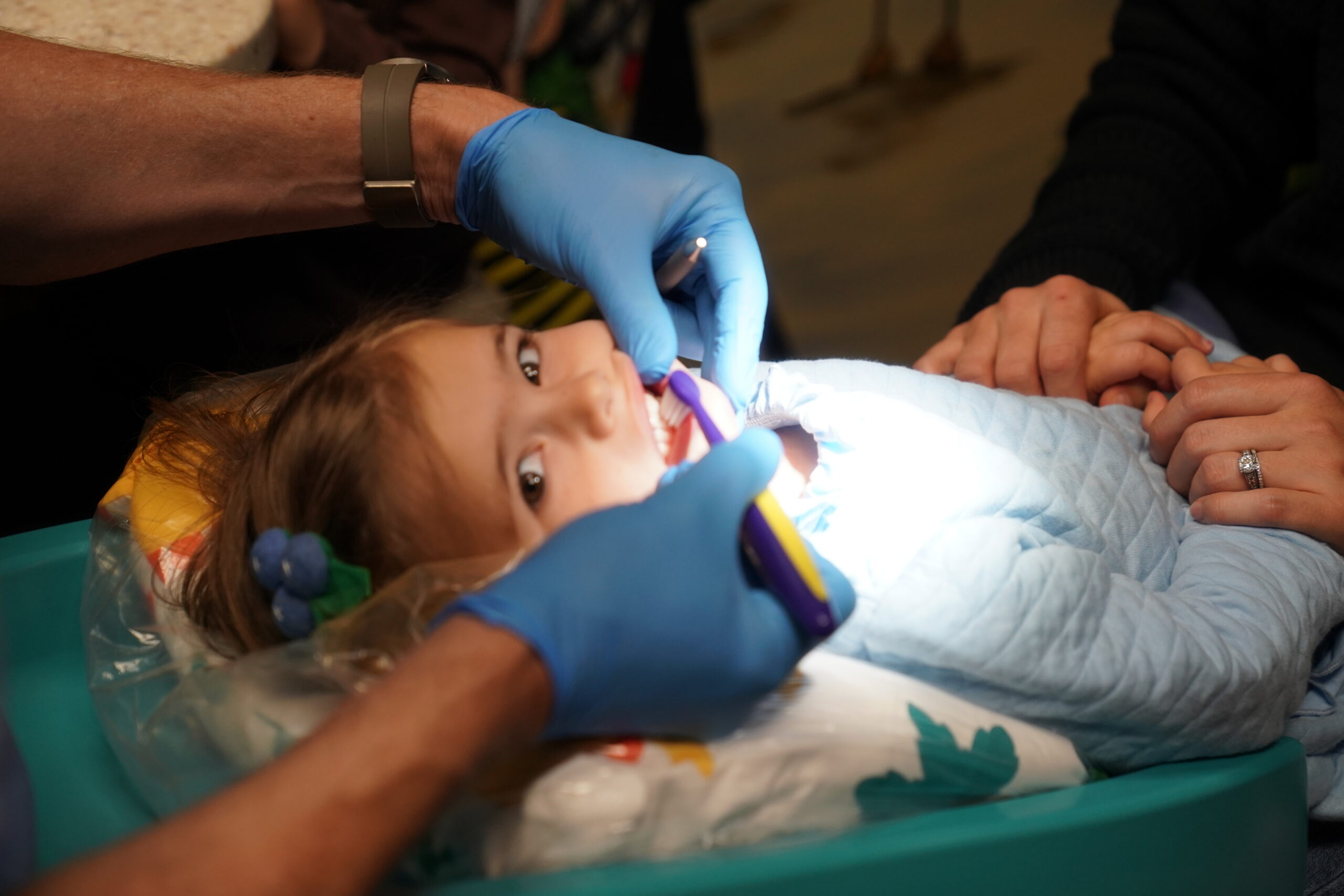
At many practices, we like to use a “knee-to-knee” exam, where your baby lies with the head in the dentist’s lap and the body in yours. This setup:
- Keeps baby close to you for comfort
- Lets the dentist see the whole mouth clearly
- Makes it easy to talk through what we are seeing in real time
Preventive pediatric dental care starts even before teeth show. During these early visits, we can:
- Watch how the jaw is growing
- Check how the tongue and lips move and rest
- Look at early bite patterns as teeth start to erupt
- Gently track when and where new teeth are coming in
When needed, we may use digital imaging or other technology, always in a way that is safe and appropriate for your baby’s age.
We also talk with parents about safe teething options, ways to move away from bottles and pacifiers at the right time, and how to guard those first teeth from decay as they appear.
Keeping Baby Comfortable and Calm at the First Visit
Keeping your baby calm is just as important as checking the mouth. Pediatric dental teams are trained to work at your child’s pace.
To help babies feel safe, we often:
- Use soft, soothing voices
- Move slowly and explain what we are doing
- Offer lap exams so baby can stay close to a parent
- Welcome a favorite toy, blanket, or pacifier during the visit
We watch your baby’s cues like crying, turning the head away, or stiffening the body. If baby seems overwhelmed, we pause, comfort, or adjust what we are doing so the visit stays short and positive.
You can help set the tone by:
- Booking the visit at a time when your baby is usually awake and content
- Bringing a feeding bottle, nursing supplies, or small snacks for after the visit when age appropriate
- Speaking calmly, holding baby close, and staying relaxed yourself
Take Action Early to Protect Your Baby’s Smile
You do not have to wait for that first tooth to appear before you think about dental care. Early visits with a dentist for infants in Mt Pleasant help build trust, shape healthy habits, and catch small problems before they affect feeding, speech, or tooth development.
By cleaning your baby’s gums each day, watching for the warning signs we shared, and building a relationship with a pediatric dental specialist, you give your child a strong start. At Kids Teeth, we love meeting little ones early and helping families feel supported as those tiny smiles grow.
Protect Your Baby’s Smile With Expert Infant Dental Care
If you are ready to take the next step in caring for your baby’s oral health, schedule a visit with our experienced dentist for infants in Mt Pleasant. At Kids Teeth, we focus on gentle, preventive care that helps your child feel comfortable from their very first appointment. Reach out today to ask questions, plan your child’s first visit, or book an appointment through our contact page.
Ready for a happier dental visit?
Two Mount Pleasant offices and a team kids actually look forward to seeing.